Tuesday, April 20, 2010

Dangers of Drugs


ABC Journalist Peter Lloyd

One Flew Over the Cuckoo's Nest
Schapelle Corby Seeks Mercy from President Susilo Bambang Yudhoyono for 20-Year Sentence for Smuggling Drugs into Bali.


Bali News: One Flew Over the Cuckoo's Nest
(4/13/2010) The Australian beautician academy student Schapelle Corby has reportedly filed a petition with Indonesia's President Susilo Bambang Yudhoyono seeking clemency in connection with her 20-year jail sentence for smuggling 4.2 kilograms of marijuana into Bali. Arrested in October 2004, Corby underwent a high-profile trial that ended in January 2006 with the Indonesian supreme court reaffirming the original sentence of 20 years imprisonment.

In seeking mercy from Indonesia's president, lawyers for Corby are asking that her sentence be reduced or that she be set free. The petition to the president contains affidavits from Indonesian and Australian mental health experts affirming that the 32-year-old Queensland woman is clinically insane, suffering from deep depression and psychosis. A Bali-based psychiatrist has stated that Corby's life is at risk if she is not removed to new surroundings, given close supervision and put on a regular course of medication.

Her doctors alleged that the prison environment at Bali's Kerobokan penitentiary is unsuitable for the woman who has adopted a child-like demeanour that has made her susceptible to exploitation.

The request to President Yudhoyono also underlines alleged irregularities in the police investigation and trial process including a failure to fingerprint the plastic bag containing the marijuana; the lack of a video record of her arrest at Bali's airport, the failure to provide surveillance videos from the airport in Australia; the lack of weight records for the baggage boarded in Australia and the refusal of Indonesian officials to allow DNA testing of the confiscated plants. In further mitigation, lawyers for the Australian woman cite a major cocaine bust at Sydney's airport that implicated baggage handlers who reportedly committed their crime on the same day Schapelle Corby transited that airport on her way to Bali.

Clemency appeals are exceedingly rare in Indonesia. The President is not under any legal compulsion to respond to the petition and, if he does so, such a reply could take months or even years.

______________________________________________________


34 Iranians held for drug offences in 5 weeks
By STEVEN DANIEL

stevend@thestar.com.my

KUALA LUMPUR: Just five weeks into 2010, the authorities have already nabbed 34 Iranians for attempting to smuggle in drugs in their luggage.

“Last year, a total of 24 Iranians were arrested for trying to smuggle in about 12.8kg of methamphetamine,” Federal Narcotics director Comm Datuk Zulhasanan Najib Baharudin said.

They had smuggled the designer drug methamphetamine or locally-known as syabu which fetched the high price of about RM250,000 a kg, he told a press conference in Bukit Aman yesterday.

Apart from the 34 Iranians, Comm Zulhasanan said three locals, one Singaporean and one Filipino were also arrested during this period.

Police seized 41.97kg of methamphetamine was seized during 11 raids and seizures during the period worth RM10.5mil. A total of RM225,850 in cash was also seized.

The 39 people detained, aged between 15 and 58, comprised of 36 men and 3 women. A 15-year-old girl was detained for questioning after her Iranian parents were caught attempting to smuggle syabu.

Most of the arrests took place at the KL International Airport. Some were nabbed at posh hotels or residences which led to the busting of two international drug syndicates based in the country.

“The modus operandi of the smugglers include swallowing capsules of 7gm to 10gm each, ranging from 80 to 200 capsules per person, depending on their body size.

“Other popular methods include hiding the drugs inside bags or containers or soaking the clothes in drug solutions.”

Comm Zulhasanan said that methamphetamine was mostly manufactured in Iran before it was brought to Dubai as a transit point and then making its way to Malaysia and distributed locally or sent to neighbouring countries.

______________________________________________________

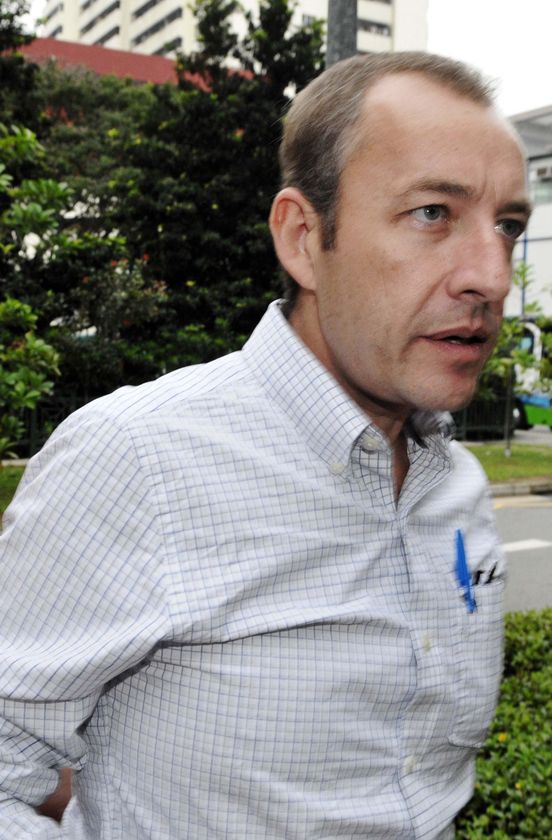
Peter Lloyd (born 1961) was the South Asia correspondent for the Australian Broadcasting Corporation. Based in New Delhi, Lloyd reported for the Australian national broadcaster across all national and international radio and television news and current affairs programs.

Lloyd was due to return to Australia to co-host Breakfast News with Virginia Trioli on ABC2 from October 2008, however, he was arrested in Singapore on drugs charges.

On 18 July 2008, Lloyd was arrested in Singapore and the local police charged him with drug-related offences. Police had alleged that Lloyd was found in possession of a small quantity of the drug 'ice', one improvised smoking pipe, and six syringes. The Singaporean police said that his urine tested positive for amphetamines and he was being investigated for trafficking a controlled drug.[2] Lloyd was released on bail of SGD 60 000, posted by his lover Mohamed Mazlee bin Abdul Malik.

In November 2008 Singapore's Attorney-General dropped the harsher trafficking charge against Lloyd, leaving him to face four lesser charges.

On 2 December 2008, Lloyd was sentenced to 10 months in jail after pleading guilty to three of the charges. On 23 June 2009, Lloyd was released from jail early for good conduct.

Monday, April 19, 2010

Best Travel Tips as encountered and explained by a world traveler. - An Excerpt


KLM Carrier - Photo credit : Oxymanus

SECRETS OF TRAVEL

1. Smile and be open and honest with everyone, they will be your
next solution.
2. Come from a good family, this will make number one easy.
3. Be the first to visit a place.
4. Fear is your friend.javascript:void(0)
5. Money is everywhere on the planet, you will have money.
6. Change all the time, adapt.
7. Common sense
8. Do not try to change people, do not feel sorry for people.
9. Share your knowledge with everyone that ask, however offer prudently.
10. Recognize angry people and walk away fast, no regrets.
11. Do what you like and not the guidebook or other people.


WHAT TYPE OF PERSON WILL HAVE TROUBLE TRAVELING

1. Save the world, people with a desire to stop problems in the
world, Starvations, religions, or self appointed saviors of
the planet, they are normally self-appointed victims, they will
volunteer to be victims in another country, they are
searching for problems.
2. Alcoholics or drug users.
3. People that do not read.
4. Lazy.
5. People that talk about sex, not the same as people that talk about
pretty people.
6. People that disobey the laws.
7. Shoppers
8. Impatient people or people that complain about weather.


Best advice:

1. Say Hello, to all other travelers. You never know when you need help.
2. Theft. Out of site, out of mind. Do not show people what you have.
People steal what they can see. EXAMPLE: Walking around with a camera.
Put it in a backpack.
3. Always take a taxi, or bus, etc from bus station to hotel.
4. Store you passport, travel check information in you e-mail box. Scan
5. Carry a Padlock, Place it on a door. Put eyelet screw on door
if possible or when needed, use your own lock.
6. Do not look rich, dress, jewelry, tourist clothes, expensive backpack.
7. Take long pants on all bus rides. Take lots of clothes.
8. Take lots of pictures, its all that will remain.

Hotels: Best 10 Questions

1. Let me look at the mattress please.
2. Do you have free water?
3. Do you have free breakfast?
4. Do you have hot water showers
5. Do you heat with Electricity? Solar? Gas?
6. Is the hot water 24 hours a day?
7. Do you have the hasp, so I can put on my own lock?
8. Are the showers free?
9. Can I bring friend into the hotel, or my room?
10. Do you have cable TV? HBO, Cinecanal?
11. Do you have a book exchange?

Save money:

1. Do not drink beverages, other than water. $3
2. Electric Hot Plate to cook, $2 Day
3. Guidebook for rooms. $2 Day
4. Water purification drops. $1 Day
5. Take overnight bus. $1 Day
6. Rent rooms in hotels with free water. $1 Day
7. Travel, or share a room with a friend $1 Day
8. Wash you own clothes .50
9. Eat only 1 sit down meal a day and eat in market for the others.
10. Stay for one month in each location and negotiate a price of room
for 1/2 normal price.

Jobs:

1. Teach English
2. Waiter or Waitress
3. Pick Fruit
4. Cook food at hostel for a month
5. Reception of desk.
6. Massage Therapist
7. Dive master
8. Tour guide, or selling tours
9. Graphic on computer. Trade for room
10. Travel Agency.

Most Likely to get robbed:

1. Walking around with camera around neck.
2. Cleaning people steal from your hotel room.
3. Putting things in the compartment above the seat in the bus.
4. Walking from the bus to the hotel with your backpack.
5. Whenever you put a backpack of any sorts on the ground next to you.
6. From other travelers you trust. If they have traveled a long time...?
7. Walking away from the automatic teller machine.
8. By Police
9. People that do not lock their doors when they go to toilet.
10. People that say, "The are very honest here, they would never rob me."

Most Physically dangerous:

1. Getting hit by cars.
2. Having sex with the locals.
3. Walking home very drunk after midnight.
4. Walking through groups of drunk people.
5. Tours, with bad guides. That is the job of a guide to protect you.
6. Getting involved with religious concerns.
7. Getting involved in political causes.
8. Complaining to the police.
9. Electricity in showers.
10. Military coup situations / or demonstrations.

Wanker solutions:

1. I know someone who was safe, therefore it is safe.
2. I got off the bus, and they offered me a place...
3. All the travelers are trustworthy...
4. The guidebook is terrible, nothing is right.
5. They are a peaceful people....
6. It never happened in the past...
7. My friend told me...
8. Their website said they were the cheapest Spanish school in South America
This one was quite funny. The person was paying 3 times what they
needed to pay in Quito, Ecuador. I luckily kept my mouth shut.
9. They are poor because the rich keep them poor.
10. I will give the stuff to the owner of hotel to hold.

Culture How NOT to learn about culture:

1. Go to all the hotels that cater to you country, or owned by you country.
2. Travel very fast, and only stay in a city two days. Go on all the tours.
3. Go to see the tourist sites, and not the people
4. Eat Pizza a lot, or Spaghetti. Go to Vegetarian restaurants.
5. Drive a car, and never take the bus.
6. Never leave the resort.
7. Get a guide that speaks your own language.

Why you should NOT travel:

1. Bad haircuts
2. People complain about you country, and culture
3. The pizza cheese sucks
4. People try to convince me all the time to change.
Example: Be a vegetarian, or to convince you to not like your country.
5. You will find out how lucky you are.
6. You have to see all sorts of human bodily functions
7. A future husband or wife will want you to live in one location.

How to learn?

1. Subscribe to Newsletter on information you want to learn.
2. Listen and ask questions but do never try or say a person that
has visited a country knows less than a person that has not.
3. Read the Encyclopedia on the place. Facts are better than guidebooks.
4. Find free WebPages like Geocities where people post honest information.
5. Find Logs or Blogs on subject.

10-plus ways you can lose money by doing it yourself - An Excerpt


Photo credit : Oxymanus

10-plus ways you can lose money by doing it yourself - By : Tom Barlow

Garding DIY can cost you moneyThe Moneyning blog recently did an excellent post on 10 expenses that will cost you more to do yourself than it would to hire someone to do it for you or simply just buy the finished product. This list, however, is just the tip of the iceberg. It included:

1. Growing your own food
2. Printing your own photos, notices, etc.
3. Building your own computer
4. Sewing your own basic clothes
5. Making your own pet food
6. Installing/altering appliances to make them more green
7. Making your own musical instruments
8. Fixing your small appliances
9. Selling your own personal items (rather than using a consignment shops)
10. Doing your own taxes

This list is just the starting point. There are plenty of other ill-advised DIY chores that just aren't worth the time, money or frustration. Here are three things to consider before you embark on that ambitious project.

Cost of supplies: Growing your own food sounds like a good way to trim expenses; that is, if you already own pots. a trowel, tomato cages, a cultivator, a shovel, a spade, a garden rake, a leaf rake, a weeder, a hoe, a pesticide sprayer, garden gloves, a hat, knee pads, a garden hose, a sprinkler, a fertilizer spreader, a compost bin... you get the idea. Taking these expenses into consideration, that that tomato isn't such a bargain.

In the same manner, I have a shelf full of tools I bought to use once, the expense for which I will never recoup. For example, the bookshelf that I bought a router to build -- a router I haven't used since -- ended up costing me over $120. I could have bought a better bookshelf for $40 at Staples. And don't even mention my chop saw, Dremel tool, pipe wrench...

Time sucks: How much is an hour of your life worth? If you don't enjoy the DIY job you take on, ask yourself, would I work for this wage? Gardening again is a good example. You may reap a harvest of 100 pounds of string beans, but by the time you do they'll be in season and every grocery will be selling them for $0.39 a pound. So you'll have $39.00 worth of string beans. If you put 8 hours total into those beans, you were working for under $5.00 an hour.

I've fallen into the money vs. time trap again and again, often because I have to go to the hardware three times for every job. Clearing brush, laying a brick sidewalk, installing a garage door, painting porch railings, running new phone lines; I've wasted countless hours just to save a buck or two an hour. What are your time sucks?

Lack of expertise: The worst aspect of this money trap is that, by doing something ourselves, taxes, for example, we never learn just how much money it really cost us. I've fancied myself at various times capable of installing a hard drive in my computer, hanging a ceiling fan, pruning my birch tree, patching my membrane garage roof, tuning my recumbent bicycle, and doing a brake job on my van. Each time I was forced to admit defeat and resort to that most foul-tasting of money traps, paying an expert to clean up my mess.

Of course, the list above contains many activities that people find enjoyable, and in that case, the difference between hiring to get the job done and doing it yourself can be written off as recreation. If you don't enjoy a task, however, before you do it yourself to save money, calculate your total expense -- in supplies, time, and the potential to screw it up for lack of expertise. I suspect you'll farm out a lot more jobs.

Sunday, April 18, 2010

Penang - The Pearl of the Orient - An excerpt

Penang: Pearl of the Orient
Burhanuddin Abe ,  Contributor ,  Jakarta   |  Tue, 12/29/2009 1:51 PM  |

Malaysia is more than Kuala Lumpur. Take Penang, for instance, which is just as appealing and its development just as dynamic.
The island is known not only as a city of education but also as the largest medical tourism destination in Southeast Asia.
Penang, which was the first British trade center in the Far East, is one of the most beautiful cities in the eastern region. Located northeast of the Malaysian peninsula, Penang is named after the pinang (betel nut) tree, which can be found all over the island.

Penang consists of Penang Island and Seberang Perai on the mainland peninsula. The two are connected by the 13.5 km Penang Bridge, which is the longest in Asia, and served by ferries.

Georgetown is a city on Penang Island that was named one of the best cities in Asia by AsiaWeek in 1998 and 2000. UNESCO has recognized it as a city with unique architecture. Georgetown has seen fast development over the last two centuries. Initially it was a swamp, but it was eventually transformed into a bustling trade center.

Downtown Georgetown has many old historical buildings. A British fortress was built in the city by Capt. Francis Light in 1786. Representing the British East India Company, Light accepted Penang in return for a pledge to protect Sultan Kedah from the Siamese.

Light renamed it Prince of Wales Island and later established Georgetown in the eastern cape of the island, later known as Semenanjung Daratan.

In 1805, Penang became a dependent of Bengal and was later developed into the fourth Indian Presidency of British India. In 1828, Malacca and Singapore were included into Penang territory and residential areas were established. The economy in Penang developed fast and Georgetown founded the first English school in Southeast Asia in 1816.

The Penang of today is a modern city that is considered the Silicon Valley of the East as many IT companies can be found on the island.
    
Shopping
Like Kuala Lumpur, Penang is also a shopping paradise with goods ranging from electronic gadgets and jewelry to clothes and antiques. Prangin Mall is a good place to start as it is the biggest mall on the island.

Chinatown is a must-see area, considering that the Chinese ethnic population in Penang constitutes the majority. Located in the heart of Georgetown, it is quite busy, particularly with various festivals. Lines of stores serving as the traditional business center, a Chinese temple, a Hindu temple and a mosque can be found here.

Temples
If you love historical buildings, visit one of the many temples in the area, such as the landmark Kek Lok Si Temple. Built in 1886, it is one of the biggest Buddhist temples in Southeast Asia. It has a 30-meter high pagoda and a giant statue of the Goddess of Mercy, Kuan Yin. To get to Kek Lok Si, visitors have to pass dozens of stairs flanked by souvenir stores. Interestingly, to reach the Goddess Kuan Yin statue, visitors queue for a lift that moves up at an angle of about 45 degrees. Arriving at the site of the statue, which is being renovated, one has a fantastic view of the whole island.  

Scenic spots
Penang as an island-city has beautiful beaches. Popular beaches are located along the north coast in Tanjung Bungah, Batu Ferringhi and Teluk Bahang. The area is popular among tourists and there are several hotels facing the sea, restaurants and souvenir stores.

Pasir Panjang Beach, located in the southwest of the island, is another popular spot with complete facilities. Quiet beaches can be found in Teluk Duyong, Pantai Keram Pantai Keracut and Pantai Mas, which can be reached through the Pantai Acheh protected forest in Teluk Bahang.

To get to the beaches in Teluk Bahang toward the northwest, a road passing through a mountainous area in Balik Pulau is taken where one gets to see a beautiful panorama of clove, nutmeg and durian plantations on the mountain slopes. A rural area, Balik Pulau, has many pretty Malay traditional houses. Just like a Pearl of the Orient.
 
Travel tips
Accommodation in Penang ranges from budget hostels to star-rated hotels. Budget hostels cost between $8 and $31 per night and star-rated hotels $80 to $200 per night.
The best way to explore Penang is by foot. By walking, the everyday life of the Penangites can be observed. You can also take buses, taxis or trishaws.
Fares vary sharply between public buses and taxis.  A cab from 100 Cintra Street (a hostel in Chinatown) to Batu Ferringi costs RM30.00 (US$8.80), while the bus costs RM1.50. Most city taxis do not use the meter, in which case you should agree on a price beforehand. Most city buses use coin machines to collect fares. The main bus terminals are at Pengkalan Weld (ferry terminal) and KOMTAR (ground floor).

Penang is a foodie’s haven due to its variety of hawker stalls. Among Penang’s most popular culinary delights are Penang Char Kuay Teow, Assam Laksa, Tar Sau Peah, Rojak Pasembur, Nasi Kandar and Hokkien Mee. A delicious lunch cost as little as $2.19.

Much of Penang’s nightlife can be found in the area between E&O Hotel and the Cititel. Here you’ll find smoky English pubs with darts, bars, discos and small eateries.

Penang’s main shopping areas are located on Jalan Penang, Lebuh Campbell, Lebuh Kapitan Keling, Lebuh Chulia and Lebuh Pantai. Shops along Rope Walk (Jl. Pintal Tali) offer a range of antique items and bric-a-brac.
Penang also has excellent and affordable medical services. For example, a basic standard executive health screening test including examination, electrocardiogram, chest X-ray and blood and other tests costs $130.

Fake accents can make your company larger - An Excerpt

Fake accents can make your company larger

Nury Vittachi , Bangkok | Sun, 04/18/2010 10:09 AM | Opinion


Sneaky bosses are making workers adopt weird accents to make companies sound larger than they are. “In my first job the company was so small, only three workers,” said one reader who did not want his name printed. “Sometimes I had an Indian accent, sometimes British, sometimes Romanian.” What’s a Romanian accent sound like? “We didn’t know what Romanians sounded like, so we just made it up,” he said.

One reader claims to have learned to speak English with a Na’vi accent, the language of the blue aliens from the movie Avatar. Thinks: Hmm. Are people in the corporate world impressed by a firm which employs fictional characters?

The cheekiest case was from a guy who gave his company a big-sounding name, something like Megacorp Multi-Global (Asia-Pacific) Inc. But in fact it existed only as a second SIM card in his mobile phone.

When the phone rang, he replied in an Indian accent, to make the caller think he had outsourced reception duties to a Hyderabad call-center: “MMG. Thanking you for your calling. Here is trading-wala’s reception. I putting you through to main office.” He sways his head from side to side as he talks to make himself sound more Indian.

He then puts the caller on hold briefly before re-answering in a Scottish accent. “Jest wait a wee moment, Jimmy.” Back on hold goes the caller until he re-answers in an Australian accent: “G’day, mate, so, what can I do yer for?”

But switching between accents comes with risk. Reader Jason Sydon says he is now so confused that he has lost control of his accent. “When I arrive at work, I often begin the day with an Irish accent, progressing within an hour onto Scottish. It’s not something I seem to be able to control,” he said.

Christy Chiang, a Hong Kong teenager studying Arabic, finds herself speaking English with a Middle-Eastern accent. Her Middle-Eastern lecturer finds himself using L for N in Cantonese style, pronouncing “knowledge” as “lolledge”.

On a related subject, your humble narrator received an email from an Indian police officer (who gave his name as Inspector Singh). He who complained that he had woken up with a B-movie-style Italian accent. “I tink i gotta Italiano disease! I cannot-a stop-a talkin’ a-like-a-dis. Mamma mia.”

Oddly enough this was followed by a message from someone with precisely the opposite problem. The email, signed Silvio Berlusconi, said: “Aiyo! I am waking up this morning with an Indian accent. What I am going to do? This is being most inconvenient, what with me being prime minister of Italy. And where’s the peon with my lunch? You can’t be getting good staffs these days. Where’s my jelabi?”

It’s clear that Foreign Accent Syndrome, a real disease, is continuing to spread. This is good news
for bosses who can just sack even more staff.

I just hope no one tells the bosses in this part of the world about Amy Walker, a young British woman who can do almost any accent in the world more or less perfectly (look her up on YouTube). We could launch an Asian equivalent of BBC World Service Radio and just employ her to do everything. This is actually not a bad idea.


The writer is a columnist and journalist.

Singapore through Hawaiian Eyes


Singapore Skyscrapers - Photo credit : Oxymanus

Surviving a Singapore fling - An Excerpt

Dalton Tanonaka , WEEKENDER | Mon, 03/29/2010 3:58 PM | Dalton Tanonaka

Singapore is just a 75-minute flight away from Jakarta, closer than Bali or your Kuningan dinner meeting on a bad traffic night.

It’s so efficiently manageable that international visitors refer to it as “Asia for Idiots”.

And its white-shirted bureaucrats have loosened up enough to open a Las Vegas-style casino that includes performances by the local version of the Pussycat Dolls.

So why do I still find the Lion City a weak kitten compared to its Sumatran tiger neighbor to the south?

My most recent visit to Southeast Asia’s smallest country came on the spur of the moment, a last-minute decision for a needed weekend getaway. I usually seek the spiritual nourishment of the warm sands of Jimbaran Bay, along with the delicious satisfaction of Seminyak’s world-class dining spots.

But I decided to go on my first extended Singapore fling in nearly 10 years. And I would soon rediscover why it would take so long to get back.

Let’s start at the airport.

After quickly getting through Changi’s painlessly efficient immigration booths, I was bewildered. And feeling quite alone.

Where were the touts pushing taxis and that “special Rolex” like those who greet you with huge smiles at Soekarno-Hatta? Is there no hospitality here?

“Sir, line up here for a taxi. Where would you like to go?” asked the elderly Chinese woman who looked like my stern aunt.

I got into the clean vehicle, driven by an elderly Chinese man who looked like my stern uncle. No chitchat. No nothing.

But that’s OK, because by the time I realized that flowing traffic is a normal thing in this part of the world, I was at my hotel in the historic Bugis district.

Actually, everything here is “historic”, preserved and promoted appropriately with markers and plaques as opposed to Jakarta’s casual approach to history.

Even the modern is advertised. Take the retail complex that sits adjacent to my hotel – “Singapore’s first glass-covered, air-conditioned shopping street.”

Are you kidding me? You mean I actually have to walk without having to keep my senses sharp for falling objects, bottomless potholes and a sudden monsoon rain? Where’s the fun?

Speaking of fun, I thought for sure I’d find it at the brand-new casino that had just opened the week before my arrival. The Resorts World Sentosa project, located on Singapore’s version of Fantasy Island, is the first of two big gambling palaces to open this year. The massive Marina Bay Sands is scheduled to begin operation in late April.

That this conservative, controlled country would embrace gaming is interesting. But morals often give way to business, and this was certainly an economic decision.

Those with foreign passports are allowed in free (Singaporeans must pay US$70), and no shorts, slippers or singlets (meaning sexy bodysuits) get through the door.

The blackjack and roulette tables are there, as are the slot machines (play the “Wheel of Fortune” progressive for the best value). And the “Maxims Dolls”, made up of mostly regional recruits, strut the main entertainment stage.

But where are the drink girls in fishnet stockings offering free beverages as they do in Vegas and Macau? And where are the infectious shouts of winning joy that erupt at casinos around the world?

“People in Singapore don’t do things with passion, they do things to make money,” said former resident Elizabeth, now based in beguiling Bali.

Heck, we gamble in Jakarta every time we try to cross the street.

And the nightlife. I was pleasantly surprised by the impressive St. James Power Station in the Harbourfront district, which has 13 different entertainment venues under one large roof. I particularly liked the Bellini Room with its classics theme.

But even there, as in the Latin and disco rooms, something was missing. Even as customers jumped around to the house beat, even as they cheered the birthday boy attempting awkwardly to dance with the Jennifer Lopez body double, something was missing.

And I’ve seen that something back in Jakarta, in the darkness at CJ’s, in the aisles at Immigrant, and especially on the tabletops at X2.

It’s called soul.

“Most people here jump around because they think they’re supposed to jump around,” explained Kalimantan native Indah, who’s now lived in Singapore for nearly 10 years.

I asked if her Indonesian “spirit” had been beaten down during her years across the sea.

“A bit. But I got quite wasted the other week, came home and threw up on my laptop.”

That was a relief to hear. Indonesians may leave their money in Orchard Road shops and Clarke Quay pubs. But they will always have their spice and spunk at home and abroad.

Hawaii native Dalton Tanonaka is the co-anchor of Metro TV’s Indonesia Now program, broadcast Saturday mornings at 9 a.m. and Sundays at 1 a.m. He can be reached at dalton@metrotvnews.com.

Memories and Challenges on Melbourne Street Circuit - An Excerpt

Special Report: Formula One
Memories and Challenges on Melbourne Street Circuit
By BRAD SPURGEON
Published: March 26, 2010


MELBOURNE — With a lively city of friendly and enthusiastic fans, with generally warm weather, the nearby ocean and a track situated in a green park within easy commuting distance of the city center, the Australian Grand Prix at Melbourne has always been a favorite of most of the Formula One teams and drivers as well as the thousands of people that follow the world’s largest traveling circus.

The race Sunday will be the 15th Australian Grand Prix for the circuit in Albert Park, south of Melbourne, since it began holding the race in 1996, when it moved from Adelaide. And with the many chicanes, stop-and-go corners and the bumpy surface of this challenging street circuit, most of the races have been interesting ones.
“Australia has always been one of the highlights on the Formula One calendar, and this has never changed for me in all my years of competing,” said Michael Schumacher, who has won the race three times.

One of the few street circuits in the series, it is closest to the one in Montreal, because it uses public roads in a temporary setup and provides a large challenge to the drivers as the grip level increases over the weekend as the cars lay down rubber and dust it off.

“It’s quite a demanding circuit because the track conditions are constantly changing,” said Robert Kubica, a driver for the Renault team.
“On Friday, the track is very green so you have to leave some safety margin, because it’s easy to run wide and end up in the wall,” Kubica explained. “You can go quicker and quicker with each run as the track rubbers in, and by the end of practice your lap times can be as much as six seconds quicker than at the start of the session.”
The cars run at full throttle for 69 percent of the 5.3-kilometer circuit and at an average speed of 225 kilometers an hour, or 140 miles an hour, over the 58 laps of the race.

About 13 percent of the lap is run under braking, and the track is very hard on the brakes.
“You need good braking stability, because it’s very bumpy in the braking zones,” said Alan Permane, the chief race engineer for the Renault team.
This year that could result in even bigger challenges for the drivers and the technicians as the brakes undergo much more stress than in recent years because of a huge increase in the weight of the car at the beginning of the race. Because of a new rule outlawing refueling, the cars will begin the race about 150 kilograms, or 330 pounds, heavier than they did last year, while the thickness of the brake discs has not changed.

Moreover, that could negatively affect overtaking efforts on a track where overtaking is already difficult, because of all the dirt off the racing line. The best corner for passing is Turn 3, but drivers also have to hope that the car ahead makes a mistake or exits the corner too slowly.
“The grip levels are quite poor, so the setup priority is to work on drivability so that the car gives you confidence,” Kubica said. “You also need a car that can ride the curbs well so that you can carry good speed through the medium-speed corners.”
But hitting the curbs too hard can hurt the balance of the car, and therefore cost it speed.

Willy Rampf, the technical director for the Sauber team, said the track was driven at full aerodynamic down-force levels in order to give the car as much traction as possible.
“I’m curious about how the tires will be working,” Rampf said. “Last year the softer of the two compounds was degrading badly after just a few laps.
“This time Bridgestone is providing us with a harder compound, which naturally has an impact on the setup.”

Most of the drivers have warm memories of Melbourne because it often was the location of the first race of the season and, therefore, of the first Formula One race of their careers. This was the case for both of the world champion drivers at the McLaren team this season, Jenson Button and Lewis Hamilton, who both drove good first races here.

“I really enjoyed my debut, running as high as fourth before retiring,” Button said. “I was on pole in 2006, although I had another nonfinish. Of course, last year was a fairy-tale race for me — I took pole and victory, which was one of the most satisfying and emotional moments of my career.”
Hamilton has also won in Australia.

“I’ve always enjoyed Albert Park,” Hamilton said. “I had a great race here on my Formula One debut in 2007, won the race a year later.”
For everyone, the nightlife and local culture make the race a high point of the season. The character, warmth and mind-set of the Australians are appreciated.
For example, the Toro Rosso team in its race preview came up with a long list of details that it likes about the race, including this particularly humorous observation:

“For those of you who are coming to the track by tram, note this sign on a bus: ‘When you leave this vehicle, please lower your head and watch your step. If you fail to do so, please lower your voice and watch your language.”’

Note :
Button Wins Wild Australian Grand Prix.Felipe Massa finished in third, behind Robert Kubica, the Polish driver for Renault, who finished second, at 12 seconds behind Button.